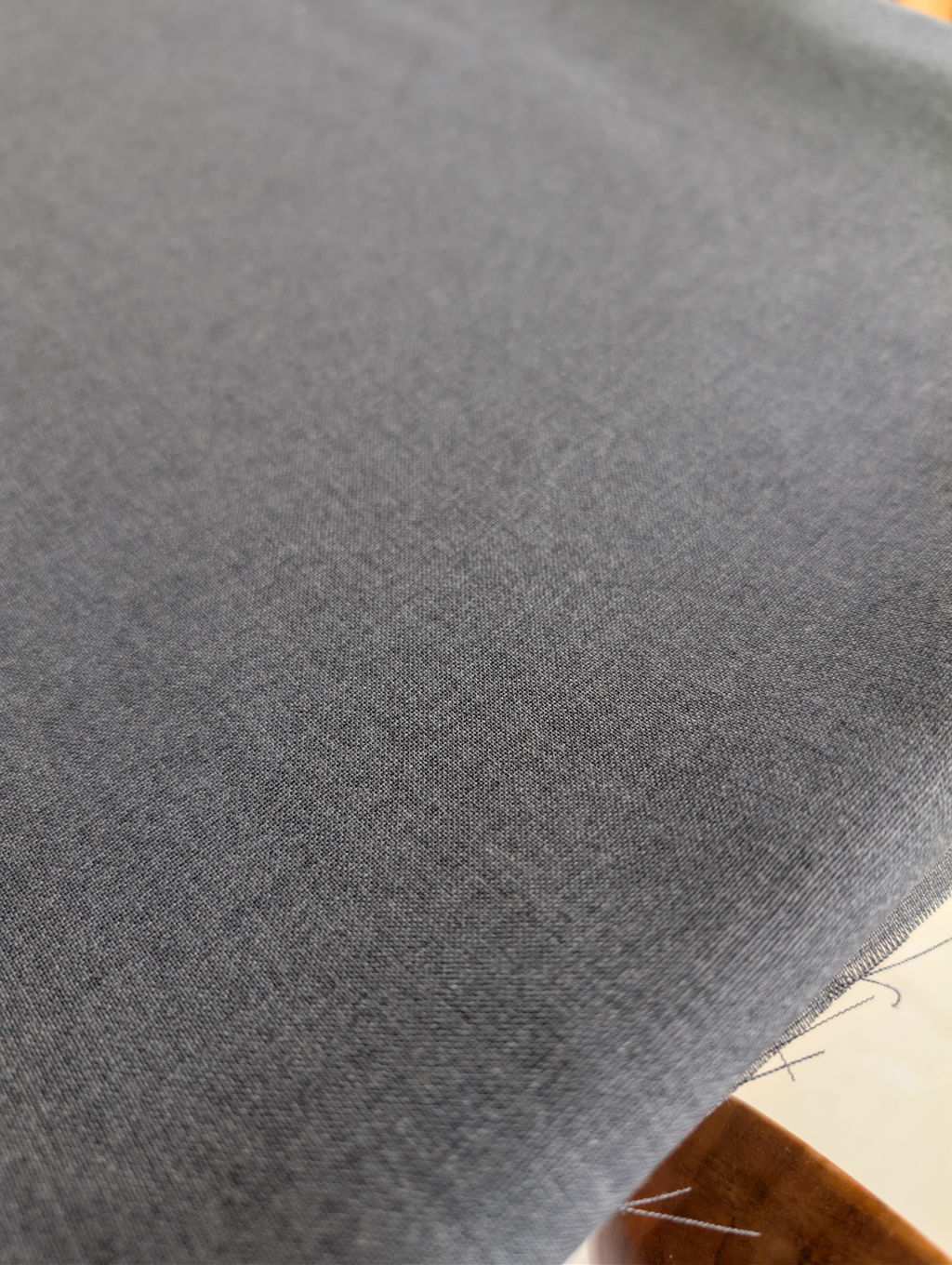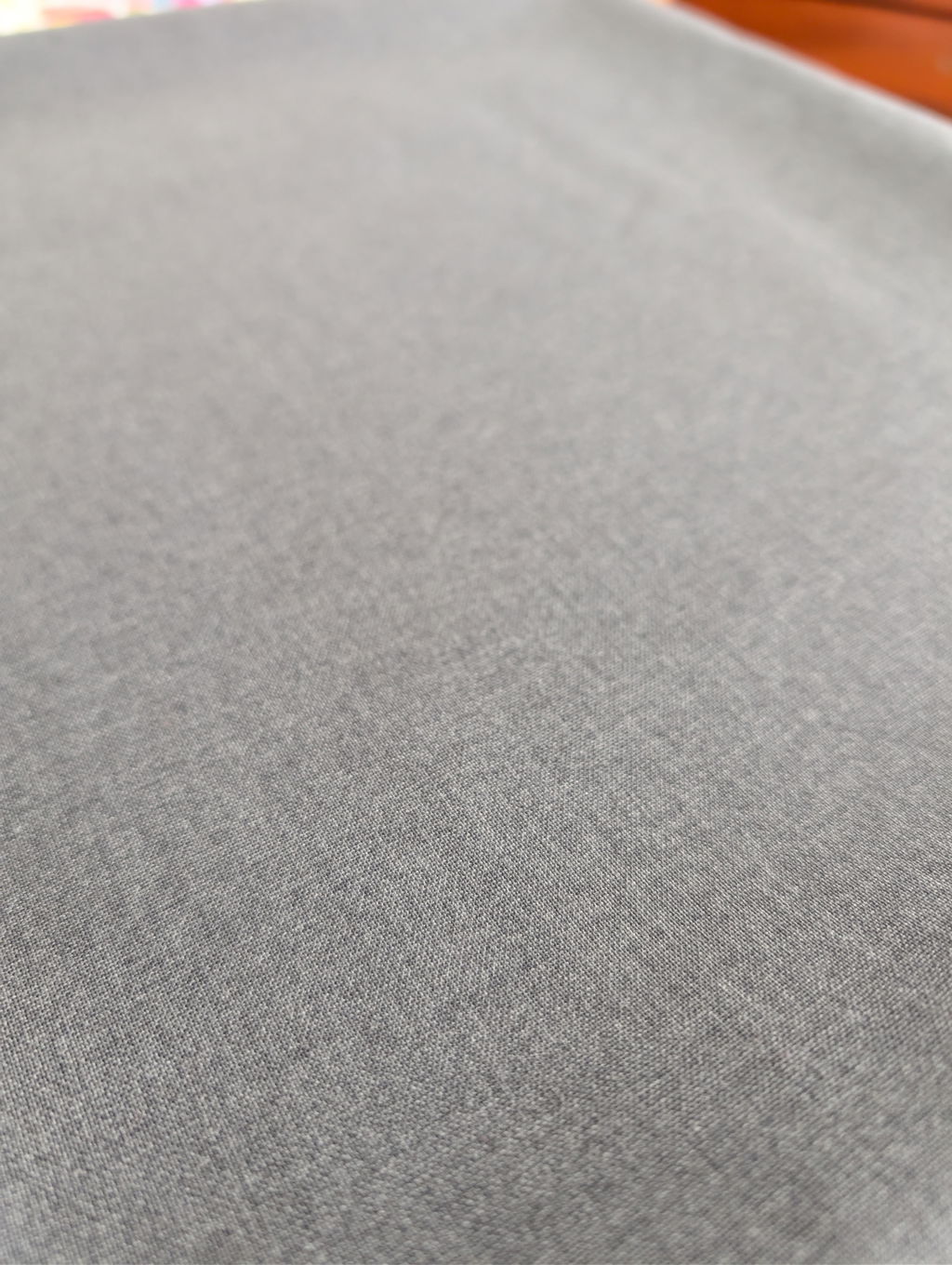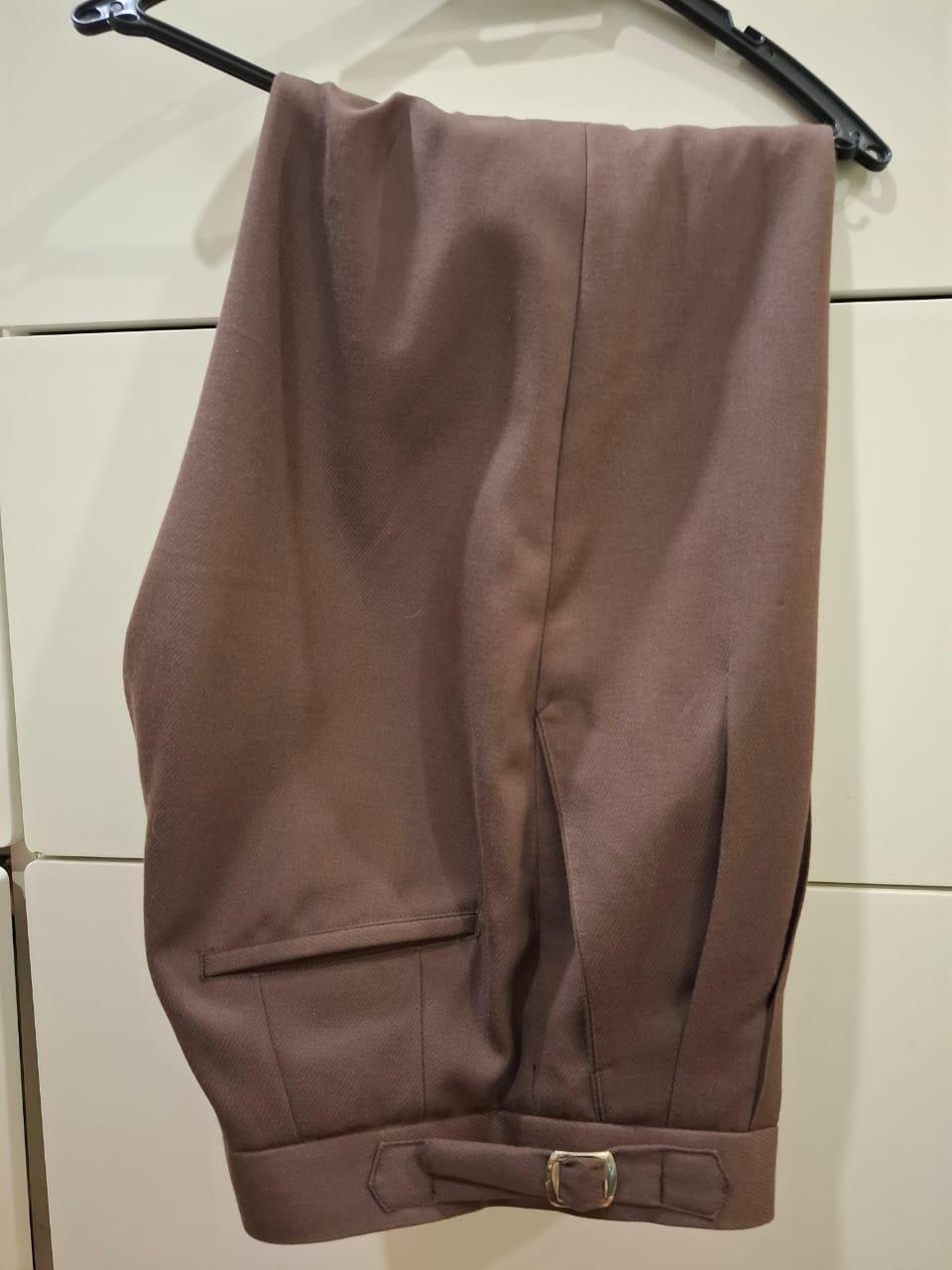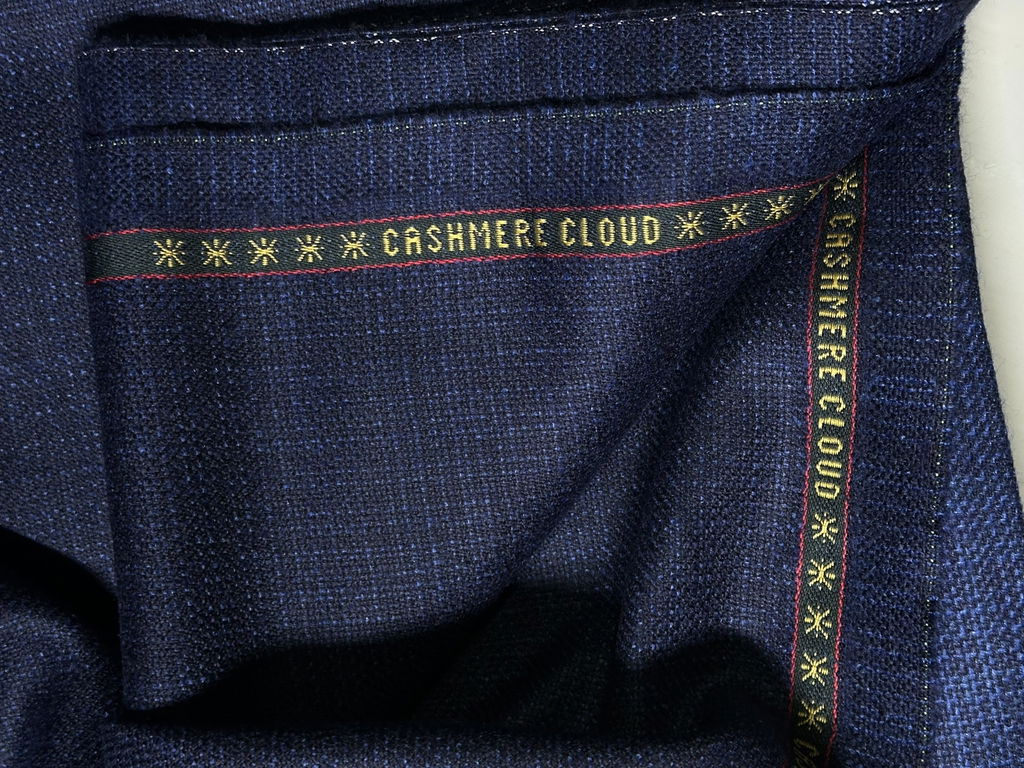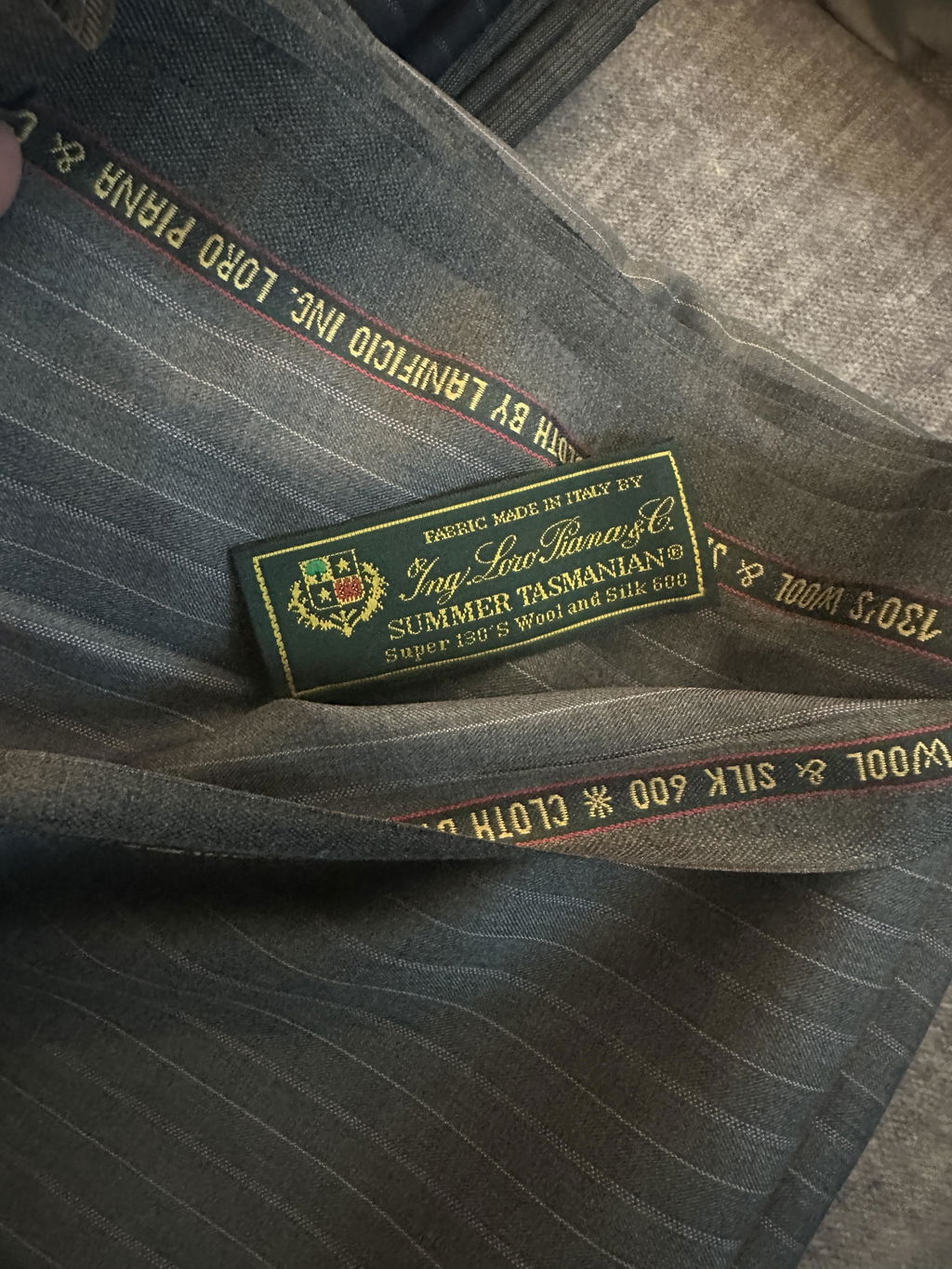

Navy and charcoal worsted wool are the most versatile fabrics for a groom's suit because they photograph well, suit most venues and can be worn again after the wedding, while lighter greys and tans suit summer weddings and black is reserved for the most formal occasions.
A groom three months from his wedding has narrowed his choice to four swatches, and they all seem right. The difference between them rarely lies in the colour name. It lies in how that colour behaves once it is made into cloth, hung on a person, and photographed in changing light. This guide walks through the main colours with that in mind.
Colour and weave work together
The same navy can look quite different depending on how it is woven. In a plain weave it reads smooth and calm. In a fine twill, a faint diagonal line gives it depth. In a hopsack, a slightly open, textured surface gives a drier, more matte look. A mid-grey in a smooth cloth can look crisp, while the same grey in a textured weave can look softer and warmer.
This matters for photographs. Flat, very smooth dark cloths can look uniform and lose detail under flash, while a subtle weave keeps some interest. When you compare colours, compare the weave too.
Navy wedding suit fabric: the safest choice
Navy is the colour most grooms land on, and for good reason. It looks formal without the severity of black, it flatters a wide range of complexions and settings, and it is easy to wear again for work, dinners and other weddings.
The choice within navy is mostly about surface. A plain navy is understated and timeless. A navy with a subtle pattern, such as a fine stripe or a barely visible check, adds character in photographs without calling attention to itself. Very dark navies can read almost black in dim venues, while mid-navies keep their colour better in daylight. If you plan an outdoor ceremony, lean towards a mid-navy.
Charcoal and mid-grey: for city and winter weddings
Charcoal is navy's closest rival. It is slightly more serious, works well for city venues, hotel ballrooms and winter ceremonies, and also wears again easily. A charcoal wedding suit looks sharp against a white shirt and a pale tie, and it is forgiving in photographs.
Mid-grey is a little lighter and more modern. It suits daytime and spring weddings well. Be careful with very pale greys: in strong light they can look washed out, and they may show marks more readily. If you are drawn to a lighter grey, judge it in daylight before you decide.
Tan, stone and light grey: for summer and outdoor weddings
Warm, light colours such as tan, stone and light grey are natural choices for summer, garden and beach weddings. They keep the suit looking relaxed and seasonal. The trade-off is practical: light colours show marks more easily, and light linen or lightweight wool will crease more over a long day. Our guide to the linen series, starting with<<Article>>, explains what to expect. If you are choosing a lightweight cloth for heat, <<Article>> covers weights and venues in more detail.
Black: most formal, least re-wearable
Black is the most formal colour, and it is the right choice for some evening and black-tie weddings. It is also the hardest to wear again, because a black suit reads as formal wear and has fewer natural occasions afterwards. Black can also look flat in daylight and in photographs unless the cloth has some texture. If you want one suit that works beyond the wedding, black is rarely the best answer.
Midnight blue: deeper than black under artificial light
Midnight blue is a very dark blue that, under artificial light, often reads richer and deeper than black. It is a traditional choice for evening wear, and it is explained further in [LINK: Article 80].
Quick decision table
| Colour | Best season | Formality | Re-wear after the wedding |
|---|---|---|---|
| Navy | All year | Medium to high | Very easy |
| Charcoal | Autumn, winter, city | Medium to high | Very easy |
| Mid-grey | Spring, early autumn | Medium | Easy |
| Light grey | Summer | Low to medium | Easy, but marks show |
| Tan or stone | Summer, outdoor | Low to medium | Easy in casual settings |
| Black | Evening, all year | Highest | Difficult |
| Midnight blue | Evening, all year | High | Difficult |
Honest note
Navy is the safest choice, not necessarily the best one for you. If your venue is a black-tie evening, black or midnight blue may be exactly right even though it re-wears less. Screens also misrepresent colour, so whatever you see online, judge the final cloth in natural light if you can. And colour conventions are conventions, not laws: they describe what is usually worn, not what you must wear.
Choose a colour you will wear again
The best groom suit fabric is the one you will still enjoy wearing long after the photographs are framed. If you are unsure, choose navy or charcoal and let the weave carry the personality; if the season or venue points elsewhere, use the table above as a guide. Fabric Finder can narrow the options by colour, season and weight, and our team can talk through the swatches with you.
FAQ
What colour suit should a groom wear? Navy or charcoal are the most dependable choices. They photograph well, suit most venues and can be worn again after the wedding. Lighter greys and tans suit summer and outdoor weddings, while black is traditionally reserved for the most formal evening occasions. Choose according to season, venue and how often you plan to re-wear it.
Is navy or charcoal better for a wedding? Neither is better in every case. Navy is slightly softer and flatters more complexions and settings, which makes it the safest default. Charcoal is a little more serious and suits city venues, hotels and winter weddings. Both re-wear very easily, so let the season and venue decide.