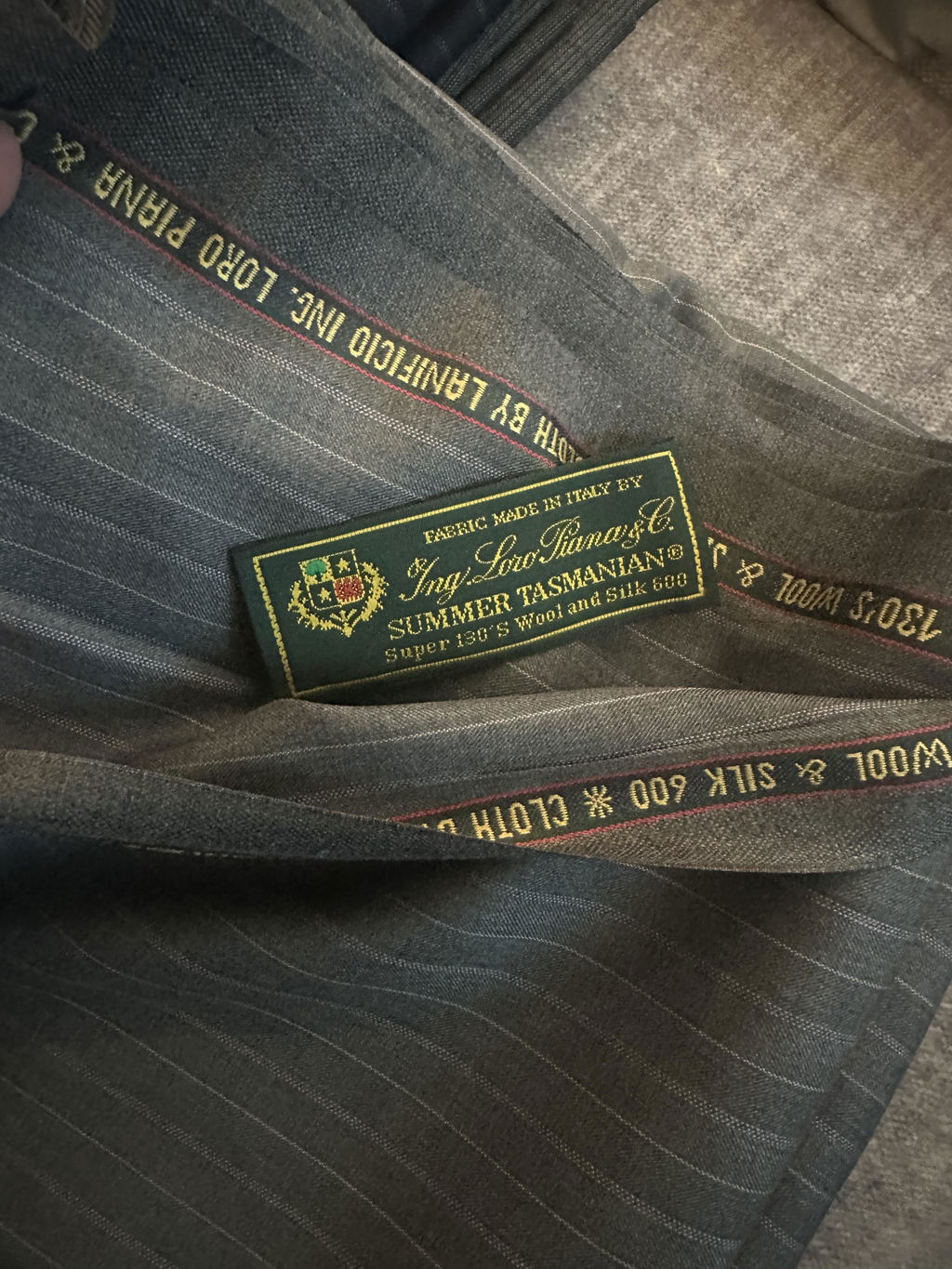

You step out of the office, out of the air conditioning, and into a Hong Kong afternoon — and within thirty seconds your shirt is stuck to your back and the jacket feels like it's trapping the heat against your skin. In hot, humid climates, open-weave fabrics with natural fibres — linen, tropical-weight wool like Fresco, and lightweight cotton — perform better than dense wool weaves, because how much air actually moves through the weave matters just as much as what the fibre is made of.
This is probably the question we get asked most often, and it's usually followed by the same wrong assumption.
The Myth: "Thin" Means "Cool"
Most people walk in assuming that if a fabric feels thin between their fingers, it'll be cool to wear. It's not that simple, and this is the single biggest misunderstanding we run into. Whether a fabric feels breathable often comes down to how loosely it's woven, not how thick or thin it is. You can have a thin fabric woven so tightly that almost no air gets through it, and a slightly heavier fabric woven loosely enough that it breathes beautifully. Weight is only half the story — weave openness is the other half, and it's the half most people never think to ask about.
What Actually Works
Linen is still the coolest thing we sell, full stop. Its fibre structure genuinely pulls moisture and heat away from your body rather than just sitting there being lightweight. The honest trade-off, which we're not going to soften: it wrinkles more than anything else in this list, and if that bothers you enough to affect how often you'll actually wear it, keep reading.
Fresco-style high-twist wool is the balanced option, and it's what we recommend most often for someone who wants to stay cool without embracing linen's creasing. It's woven open enough to breathe almost as well as linen, while wool's natural elasticity keeps it looking sharp through a full day.
Lightweight cotton rounds out the list — not as breathable as either of the above, but easy to live with, easy to care for, and a genuinely reasonable choice if you're not trying to optimize for maximum coolness above everything else.
What to Avoid, Even If the Number Looks Fine
This is the part people get wrong most often: a densely woven wool can carry a weight number that looks perfectly reasonable on paper and still feel stifling in real humidity, because a tight weave traps air and moisture against your skin regardless of how light the cloth technically is. Don't just check the g/m number and assume you're covered — ask about the weave, or better yet, feel it and hold it up to light.
The Yoo's Club View
We've written before about matching fabric weight to climate in more technical detail, and about how Fresco compares to linen and cotton head-to-head if you want the fuller picture. For Hong Kong and similar climates specifically, this is the shortlist we actually point clients toward — not a comprehensive tour of every option, just the ones that genuinely perform.
Here's a trick you can use on the spot, even without a spec sheet in front of you: hold the fabric up to a light. If you can see faint gaps between the threads, air can move through it. If it looks solid and opaque, it probably won't breathe the way you're hoping.
More on matching weight to climate: Suit Fabric Weight Guide. More on the breathability trade-offs: Linen vs Fresco vs Cotton. More on our Irish linen line: Spence Bryson Collection.
FAQ
What's the coolest suit fabric for summer? Linen is the coolest option we carry, followed closely by Fresco-style high-twist wool, which offers similar breathability with much better wrinkle resistance. Lightweight cotton is a more moderate, easier-care option.
Does a thin suit fabric automatically mean it's breathable? No. Weave openness matters as much as thickness — a thin fabric woven tightly can trap heat almost as much as a heavier one, while a slightly heavier, loosely woven fabric can breathe very well. Check both weight and weave, not weight alone.