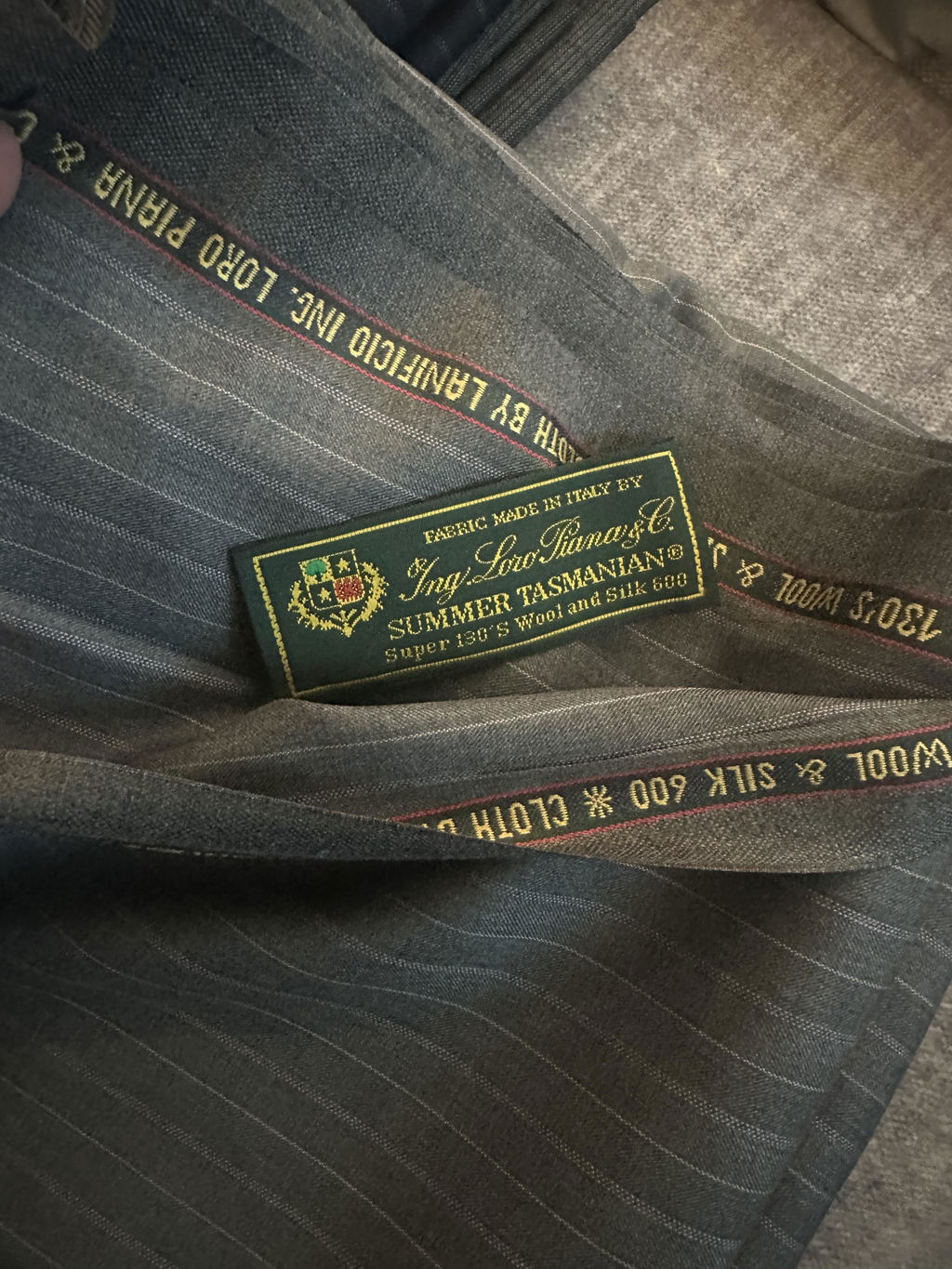

You're looking at two bunches side by side, and the price tag on one is three times the other. Nothing about the fabric explains that gap to you at a glance — they both look like good wool. Getting good value in suit fabric doesn't mean choosing the cheapest option; it means matching fabric quality to how often and where the suit will actually be worn, since paying for characteristics you won't actually use is the most common way buyers overspend.
This is probably the most honest conversation we have with clients, and it's worth having in writing too.
What You're Actually Paying For
More expensive doesn't mean "better" in some universal sense — it usually means finer, rarer, or more labor-intensive to produce. Those are real qualities, and sometimes they're exactly what you want. But they're not automatically what you need. A Super 180s fabric spun from an unusually fine micron count is a genuine technical achievement. It's also more delicate, more expensive, and arguably wasted on a suit you're going to wear to the office three days a week and put through the wringer.
When Spending More Actually Makes Sense
If it's a suit you'll wear rarely — a wedding, an important pitch, something you want to feel special every time you put it on — this is where paying for the finer, rarer, more labor-intensive cloth genuinely pays off. Low wear frequency means the fabric's more delicate qualities never become a liability, and you get to enjoy the parts that make it special without the daily grind wearing it down. The same logic applies if you're deliberately building a piece meant to last and be handed down — that's an investment purchase, and the calculation is different.
When It Doesn't
If you're building your first proper suiting wardrobe, or shopping for something you'll wear multiple times a week, the top of the range is very often the wrong purchase — not because it's bad fabric, but because you're paying for delicacy and rarity you're going to burn through in wear and tear within a year or two. This is where a reliable, well-made mid-range fabric — the kind of plain, dependable worsted we've written about before — genuinely gives you more actual value per dollar than the flashier option next to it on the shelf.
The Yoo's Club View
We'll say this plainly, because it's the whole point of this article: we're not going to push you toward the most expensive thing in the catalogue just because it's the most expensive thing in the catalogue. Some of the best value in our entire range sits in the more accessible weight tiers of names like VBC, and in dependable, no-frills lines like Groves & Lindley — genuinely good cloth, at a price that makes sense for how most people actually wear a suit. If we thought you needed the top-tier stuff, we'd say so. Often, you don't.
Here's the honest version, stripped down: good value isn't about spending less. It's about not paying extra for qualities you're never actually going to use.
More on reliable everyday value: Limited Release Collection. More on avoiding first-purchase mistakes: Buying Suit Fabric for the First Time?.
FAQ
Is more expensive suit fabric always better? Not necessarily "better" — it's usually finer, rarer, or more labor-intensive to produce, which matters for special-occasion pieces worn rarely but is often wasted on suits worn frequently, since finer fabric tends to be more delicate and wears faster with regular use.
How much should I budget for my first suit fabric? It depends on how often you'll wear it. For a suit you'll wear regularly, a reliable mid-range fabric usually offers better real-world value than a top-tier one. Save higher spending for pieces you'll wear rarely or want to last as a long-term investment.