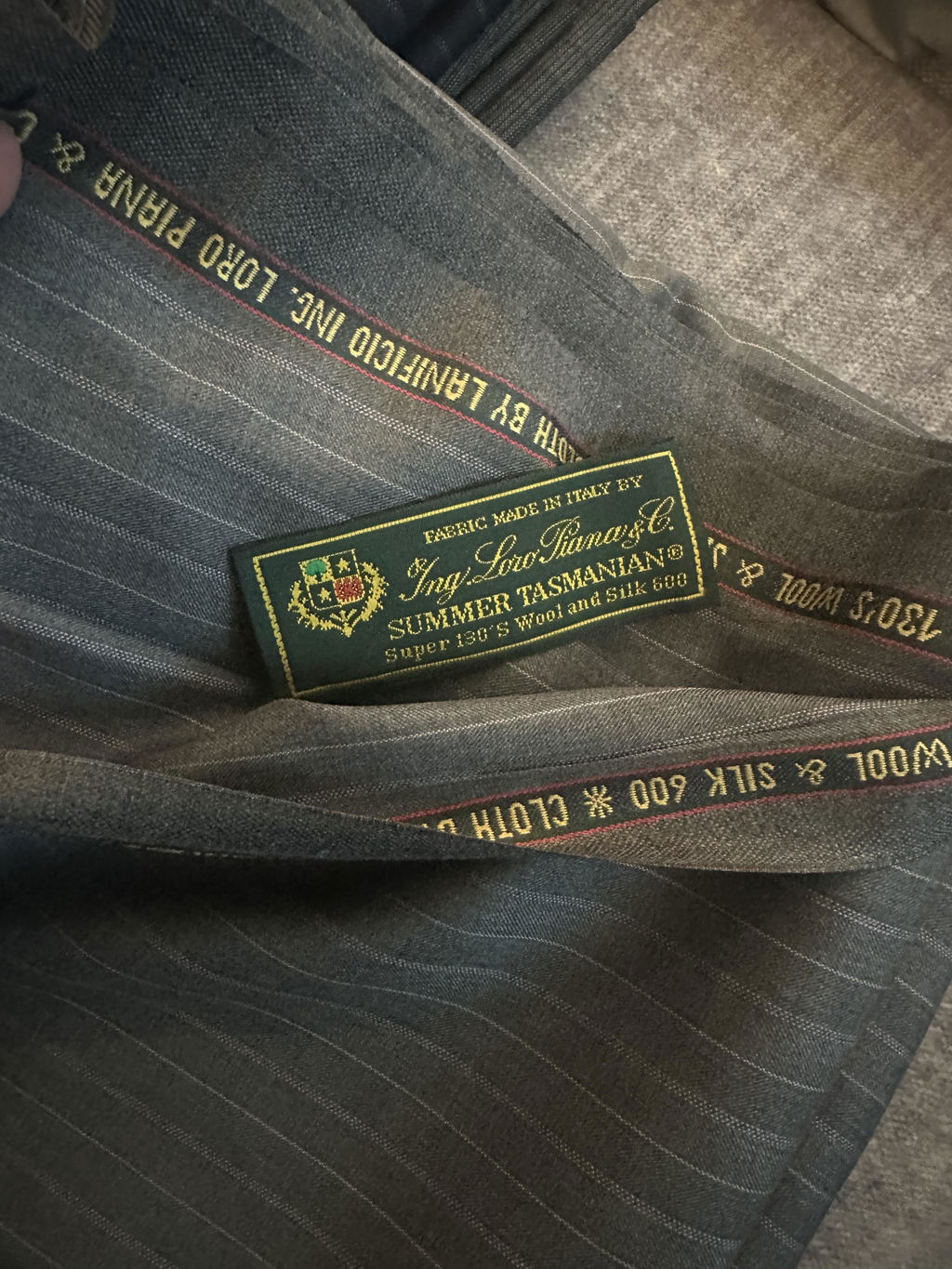

You're standing in front of the fitting room mirror, same jacket, same cut, but the tailor's just swapped the fabric — and suddenly you're standing differently. The shoulders sit cleaner, the front falls straighter, the whole silhouette reads more formal without a single measurement changing. For formal occasions like weddings and black-tie events, fabric with good structure and drape — typically finer worsted wool or cashmere blends — creates a cleaner silhouette than casual or textured weaves, which is why formalwear tailors reach for these over tweed or corduroy almost every time.
We see this moment happen in fittings constantly, and it's usually the point where a client understands why we keep asking about the occasion before we start pulling swatches.
What "Drape" Actually Means
Forget Super numbers for a second. Drape is really just about whether the fabric falls and settles against your body naturally, or whether it sits stiffly away from you and holds its own shape regardless of how you're standing. It comes down to how the fabric's weight is distributed and how the fibres are arranged — some cloths fall like a curtain, some hold like a tent. For a formal silhouette, you want the curtain, not the tent.
What to Actually Choose
Fine worsted wool is the standard answer for a reason — it's smooth, it holds a clean line, and it moves with you rather than around you. Cashmere blends push that further, adding a softness and fluidity to the fall that pure wool doesn't quite match, which is part of why cashmere-blend fabrics show up so often in higher-end formalwear. If you've read our pieces on VBC or Dormeuil, the weight ranges those mills are best known for line up almost exactly with what formalwear tailors reach for — that's not a coincidence, it's the same underlying quality these mills built their reputations on.
What We'd Steer You Away From, Even Though We Love It Elsewhere
Tweed is a genuinely wonderful fabric. So is corduroy. Neither belongs at a black-tie event, and it's not because there's anything wrong with them — it's that they speak a different visual language. Texture like that reads as considered, relaxed, characterful. A wedding or a black-tie event usually calls for the opposite: clean, quiet, unmistakably formal. Save the textured fabrics for the events where character is the point. This isn't one of them.
The Yoo's Club View
For a wedding or black-tie piece specifically, we'd point you toward our VBC or Dormeuil ranges in their finer, smoother weights before anything with visible texture or a casual finish. These are occasions where the fabric's job is to disappear into a clean silhouette, not to announce itself.
If you take one thing from this: for formal occasions, play it safe with a fine, plain worsted rather than experimenting with a new texture. This is not the event to find out you don't love something.
More on these mills: Vitale Barberis Canonico and Dormeuil.
FAQ
What fabric should I choose for a wedding suit? Fine worsted wool or a cashmere-wool blend, in a smooth, plain (non-textured) finish. These fabrics hold a clean, structured drape that reads as formal, which is what most weddings and black-tie events call for.
What is fabric drape? Drape refers to how naturally a fabric falls and settles against the body, based on the fabric's weight distribution and fibre structure — some cloths fall smoothly and follow the body's shape, while others hold their own stiffer shape regardless of posture.