
Dormeuil: The Anglo-French House Behind Sportex, Tonik, and 180 Years of Rare-Fibre Suiting
Dormeuil is a French luxury fabric house founded in 1842 by Jules Dormeuil, known for pioneering fabrics such as Sportex (1922) and Tonik (1957) and for sourcing rare fibres including vicuña and cashmere.
If VBC is the mill I'd point to for consistency, Dormeuil is the one I'd point to for range. It's a house with a genuinely dual identity — design out of Paris, weaving out of Yorkshire — and that split personality is exactly what sets it apart from a purely Italian name.
A 22-Year-Old, an Import Business, and Two Brothers
Jules Dormeuil was 22 when he started importing fine English cloth into Paris in 1842. His brothers Alfred and Auguste joined the business soon after, and what began as an import trade grew into a manufacturer in its own right by the early 20th century. That French-British duality wasn't a branding choice — the company was pushed to England more than once by war in the 20th century, and it stuck. Dormeuil still designs from Paris and weaves through its Yorkshire operations today, which is the actual source of the "French elegance, English structure" description you'll see attached to the brand.
The Innovation Timeline
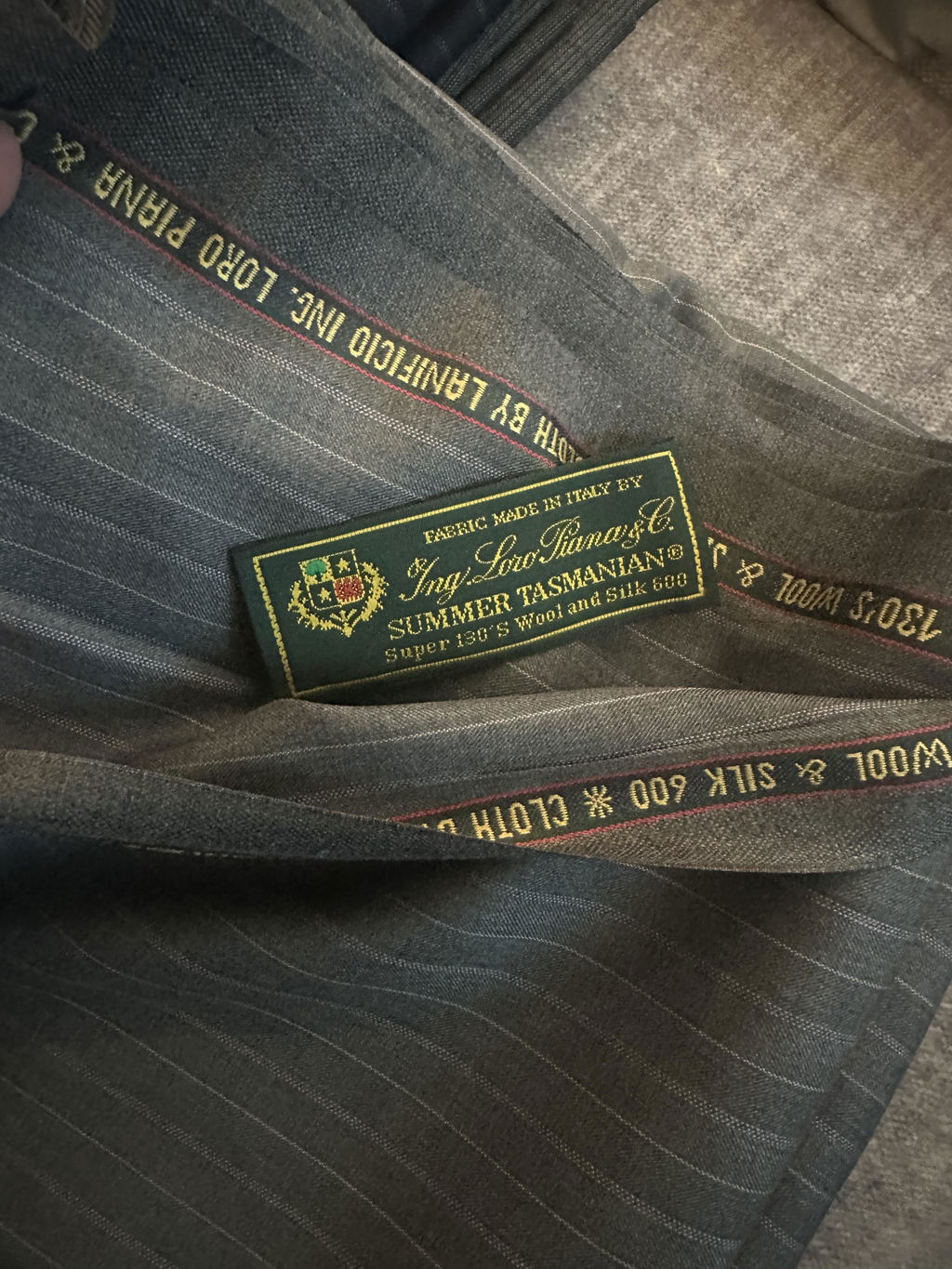
Two fabrics do most of the work of explaining Dormeuil's reputation. Sportex, launched in 1922, was the first fabric to feature a woven selvedge — a technical detail that reads as small until you realize it was the first time a mill wove its own name directly into the edge of the cloth as a mark of authenticity, a practice that's now standard across the industry. Tonik followed in 1957: a mohair-wool blend, woven entirely in England, that gave suiting a distinct lustrous sheen along with genuinely useful crease resistance. Both are still in the collection today, decades after launch, which tells you they solved real problems rather than chasing a trend.
Sourcing the Rarest Fibres on Earth
At the top of Dormeuil's range sits vicuña — sourced from wild Andean camelids that can only be shorn once every two years, making it one of the scarcest natural fibres in existence — alongside Qiviuk (Arctic muskox undercoat) and fine cashmere. This is where Dormeuil separates itself from mills whose top-end offering is simply a finer wool count. Vicuña and Qiviuk aren't finer versions of wool; they're categorically different materials with their own sourcing constraints, and that's the ceiling Dormeuil built its luxury reputation on.
Investing in British Manufacturing, Right Now
In 2025, the Dormeuil Group acquired 100% of Alfred Brown (Worsted Mills) Ltd, a Yorkshire mill founded in 1915 with its own weaving operation. This wasn't a rescue of a struggling name — it was a deliberate move to expand Dormeuil's UK manufacturing base and position the combined group among the largest fabric producers in Britain. I mention it because it's a useful signal: houses with 180-year histories don't always keep investing in physical production. Dormeuil is still building, not just resting on the archive.
The Yoo's Club View
Where VBC anchors our catalogue with consistency and scale, Dormeuil is where we point clients who want something less conventional — bolder colourways, less predictable patterns, and access to fibres most mills simply don't carry. It's a deliberate contrast in our LaGondola selection, not a duplication of what VBC already covers.
| Vitale Barberis Canonico | Dormeuil | |
|---|---|---|
| Origin | Single-country (Italy) | Dual (France design / UK weaving) |
| Known for | Consistency, vertical integration | Rare fibres, technical innovation |
| Top-tier fibre | Fine merino, mohair blends | Vicuña, Qiviuk, cashmere |
| Best fit for | Reliable, repeatable staples | Distinctive, statement pieces |
From Rare Fibre to Familiar Language
Vicuña's two-year shearing cycle is the same logic we already use when we talk about deadstock and vintage cloth at Yoo's Club — a hard, physical limit on how much of something can exist, not a marketing angle. It's just applied here to a living animal instead of a discontinued bunch. Once you see that pattern, Dormeuil's pricing at the top of the range stops looking like luxury markup and starts looking like arithmetic.
Explore the Dormeuil Collection at Yoo's Club.
FAQ
What's the difference between Dormeuil and an Italian mill like VBC? Dormeuil designs out of Paris and weaves primarily in Yorkshire, England, giving it a French-British hybrid identity, whereas mills like VBC are single-country, vertically integrated Italian operations. The two also differ in specialty: Dormeuil is best known for rare fibres and technical fabric innovations like Sportex and Tonik.
What is Sportex? Sportex is a Dormeuil fabric launched in 1922, notable as the first cloth to feature a woven selvedge — weaving the brand's identity directly into the fabric edge as a mark of authenticity.
Is Dormeuil a French or a British fabric house? Both, genuinely. Dormeuil was founded in Paris in 1842 and remains headquartered in France, but its manufacturing base has been rooted in Yorkshire, England for over a century, including its 2025 acquisition of the Yorkshire mill Alfred Brown.