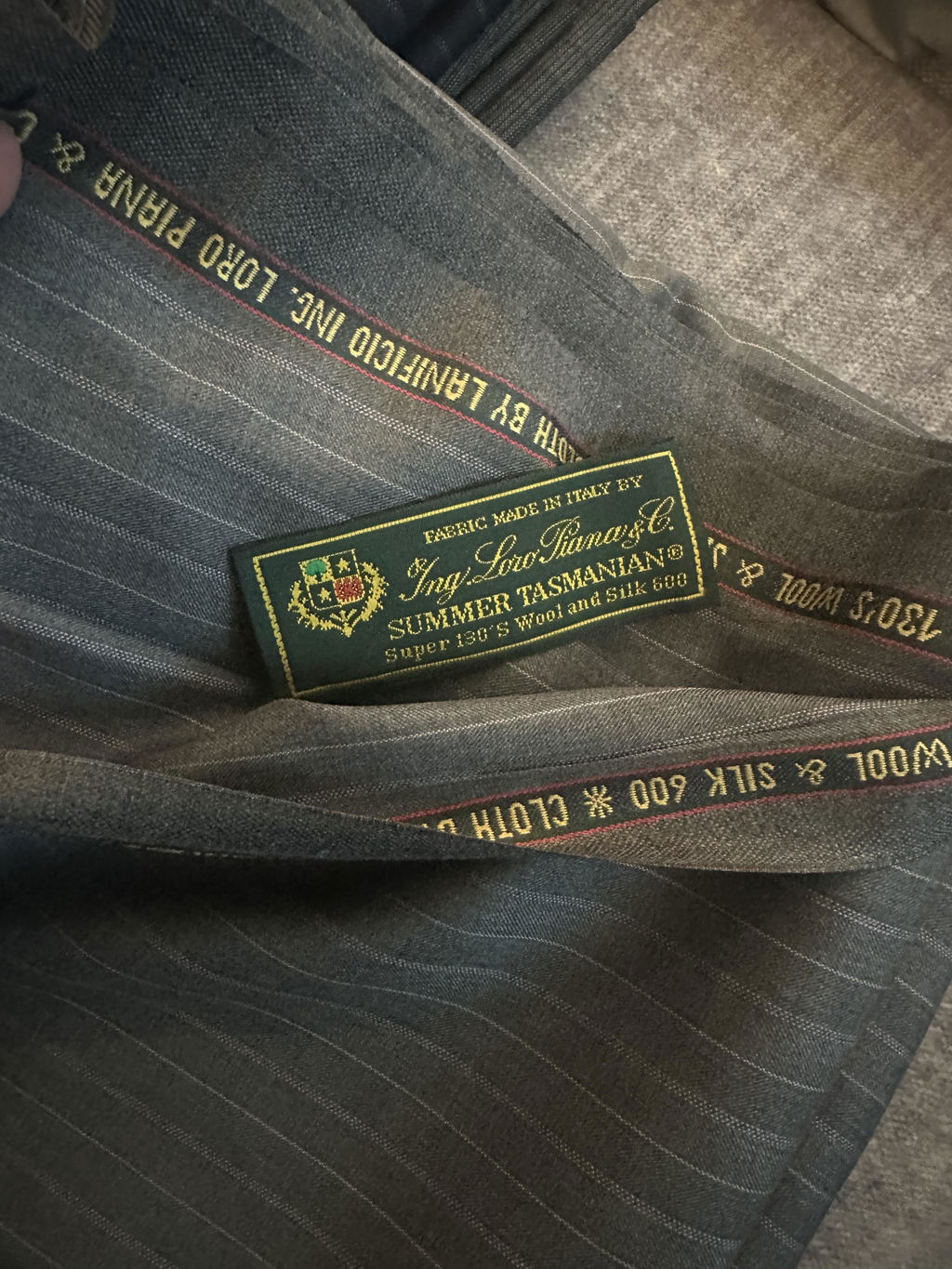

Buying Suit Fabric for the First Time? Avoid These Common Mistakes
First-time suit fabric buyers most often go wrong by focusing only on thread count or "Super number" while overlooking fabric weight, finishing quality, and intended climate — all of which affect comfort and durability more directly than the Super number alone.
The regret that actually stings after a first fabric purchase usually isn't "I paid too much." It's "I bought the wrong thing." Overpaying is annoying; ending up with a fabric that's wrong for your climate, your occasion, or your actual wear pattern is the mistake people carry around for years. Here are the five ways that happens, and how to skip past all of them.
Mistake 1: Chasing the Super Number and Nothing Else
Super 100s, Super 130s, Super 180s — these numbers measure fibre fineness, not overall quality, and they say nothing about how the fabric was finished. Two fabrics with the same Super number can perform completely differently depending on the finishing process behind them. A higher Super number on its own just means finer, softer fibre — which also, often, means more delicate fibre. Chasing the highest number you can afford, without asking anything about how it was finished, is the single most common first-time mistake.
Mistake 2: Ignoring Weight for Climate and Occasion
This is the mistake with the biggest real-world consequence, and it's common enough that we've written an entire separate guide on it: fabric weight, measured in g/m², and how to match it to your climate. A fabric can be technically excellent and still be the wrong choice if its weight doesn't suit where and when you're actually going to wear it. If you only fix one thing from this article, make it this one — go read that guide before you finalize anything.
Mistake 3: Assuming "More Expensive" Means "Right for Me"
Not every occasion calls for the highest spec you can afford. A daily-wear office suit doesn't need Super 180s fragility any more than a summer garden wedding needs a heavy winter flannel. Price and appropriateness are different questions, and conflating them is how people end up with beautiful fabric that's genuinely the wrong tool for the job it needs to do. Ask what the fabric needs to survive — daily wear, one formal event, a specific season — before you ask what the most impressive option is.
Mistake 4: Hesitating Too Long on Limited Stock
This one's specific to how we sell fabric, and we'd rather tell you plainly than let you find out the hard way: deadstock and vintage rolls are not restockable. When a discontinued bunch is gone, it's gone — there's no reorder, because the mill isn't weaving it anymore. We're not saying this to manufacture urgency around a normal in-stock item. We're saying it because it's simply true for this specific category, and it's worth knowing before you spend two weeks deliberating over a roll with three metres left.
Mistake 5: Forgetting the Fabric Needs Care Before It Even Reaches a Tailor
A lot of first-time buyers plan carefully for how they'll care for the finished suit and give zero thought to the weeks the raw fabric spends sitting at home before it ever reaches a tailor. We've covered this in detail in how to store suit fabric before it reaches your tailor — the short version is flat storage, out of direct light, away from humidity. It costs nothing to do right and it's genuinely easy to get wrong by accident.
The Three-Question Framework
If you want a shortcut that sidesteps most of the mistakes above at once, ask yourself these three questions before you buy anything: What occasion is this for? What climate will I actually be wearing it in? What's my budget range? Answer those honestly, in that order, and the right weight range, the right finishing priorities, and the right price point mostly sort themselves out. Most bad fabric decisions come from skipping straight to browsing before answering any of the three.
The Yoo's Club View
We built our Fabric Finder specifically so you don't have to hold all of this in your head at once — you can filter by season and occasion and let the tool narrow things down instead of guessing. If you're still unsure after that, our team is genuinely happy to answer questions before you commit to anything. First-time buyers second-guess themselves more than they need to; asking us a question costs you nothing, and it's a much cheaper mistake to avoid than buying the wrong roll.
Not sure where to start? Try the Fabric Finder or reach out to our team directly — we'd rather answer a question upfront than have you guess.
FAQ
What should I look for when buying suit fabric for the first time? Prioritize fabric weight and finishing quality alongside the Super number, and match your choice to the specific climate and occasion you're buying for rather than simply choosing the highest Super number you can afford.
Does a higher Super number mean better fabric? Not on its own. A higher Super number indicates finer fibre, which often means a softer feel but also more delicate, less durable cloth. Quality depends just as much on finishing and construction as on fibre fineness alone.
Daniel Hui, Founder, Yoo's Club