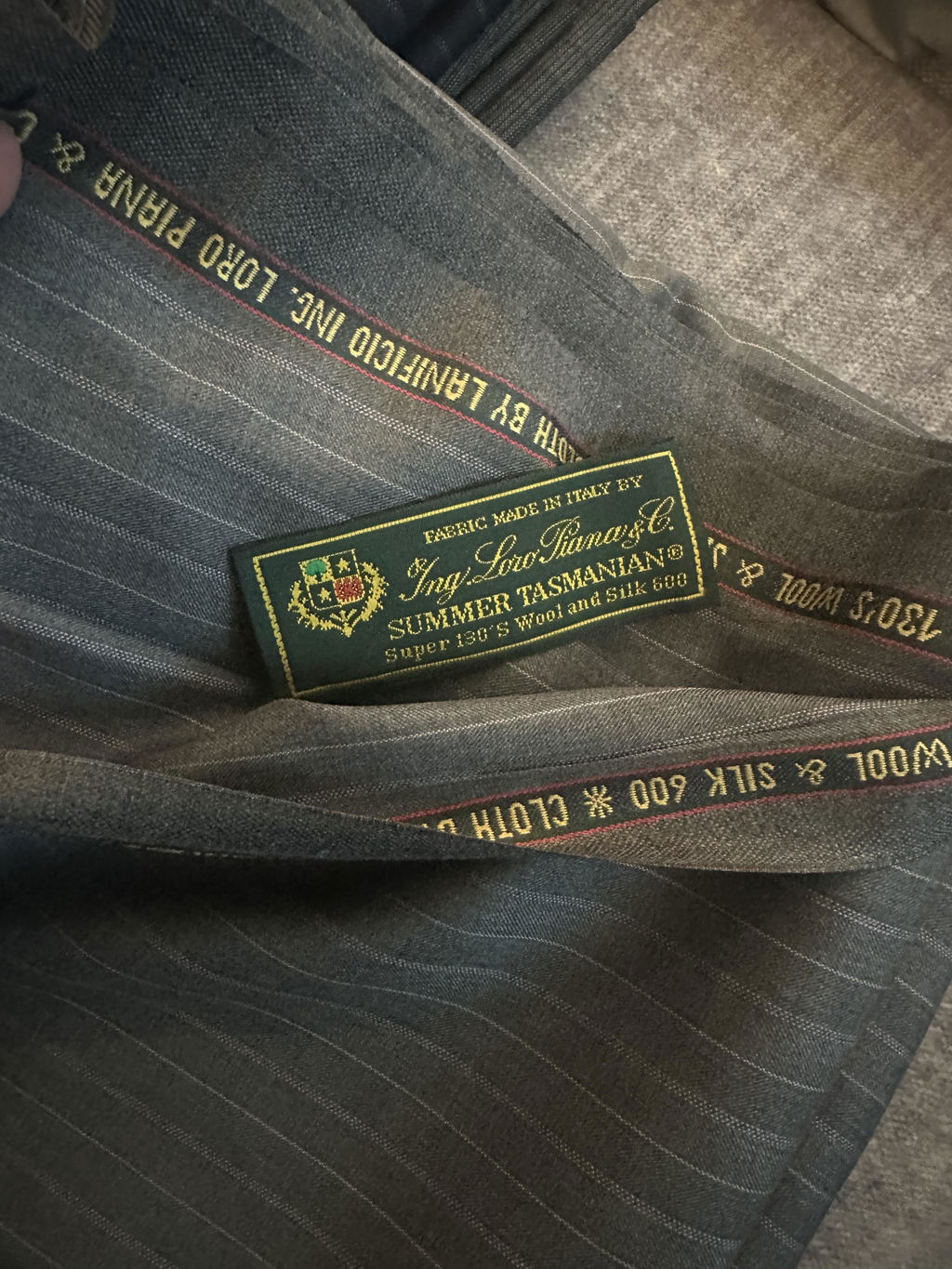

Why Hanger Material Matters More Than You Think for Suit Shoulders
Wide, contoured wooden hangers preserve a suit jacket's shoulder shape better than thin wire or flat plastic hangers, which can cause visible shoulder dents and lining stress over time.
This is one of those details that seems too small to matter until you actually see the damage it causes — and by the time you notice, the shape has usually already set into the shoulder.
What a Bad Hanger Actually Does
A jacket's shoulder is one of its most structurally important, and most delicate, parts — it's where the canvas, padding, and outer fabric all come together to hold a specific shape. A thin wire hanger, or a narrow flat plastic one, supports that entire structure on a much smaller contact area than the shoulder actually needs. Over weeks and months of hanging the same way, that narrow point of contact presses in, and the shoulder can develop a visible dent or peak exactly where the hanger's edge sits. The lining takes stress too, since it's being pulled against a shape the jacket wasn't built to hang from. None of this happens after one use — it's cumulative, which is exactly why it's easy to ignore until the damage is already visible.
Why Wide, Contoured Wood Works Better
A proper suit hanger is wide enough to extend close to the jacket's actual shoulder seams, and curved to roughly match the shoulder's natural shape rather than forcing it flat. That combination — width plus curve — spreads the jacket's weight across a much larger area instead of concentrating it at two narrow points, which is the entire mechanism behind why wood hangers are the standard recommendation for anything you actually care about. Weight matters too: a sturdier hanger holds its shape under a jacket's weight over time, where a flimsy one can gradually bend or warp.
What to Actually Look For
You don't need to overthink this purchase. Three things matter: width (close to your jacket's actual shoulder width, not generic "one size fits all"), curve (a visible shoulder-shaped contour, not a flat bar), and material (solid wood holds its shape under weight better than hollow plastic). Beyond those three, most of what you'll see marketed as premium hanger features is genuinely optional.
The Yoo's Club View
We talk a lot in this series about protecting an investment you've already made in good fabric — and this is one of the cheapest ways to do exactly that. A proper hanger costs a fraction of what a single tailoring alteration would cost to fix a shoulder that's already deformed from years of the wrong hanger. It's the same logic we apply to how we store deadstock and vintage cloth before it ever reaches a tailor: the material itself only holds up if the small, unglamorous handling details are right, and the hanger is one of the most overlooked of all of them.
From a Five-Dollar Fix to Years of Shape
This is about as close to a free upgrade as garment care gets — swap out the wire and thin plastic hangers in your closet for a few proper wide, contoured ones, and you've addressed one of the more common, entirely preventable ways a good jacket loses its shape over time. It costs very little and takes five minutes to fix, for a problem that otherwise takes a tailor to correct.
Also worth reading: how to store suit fabric before it reaches your tailor.
FAQ
What kind of hanger is best for a suit jacket? A wide, contoured wooden hanger that closely matches your jacket's actual shoulder width, with a visible curve that follows the shoulder's natural shape rather than a flat bar.
Do wire hangers really damage suits? Yes, over time. Wire hangers concentrate a jacket's weight on a very narrow contact area, which can gradually cause visible shoulder dents and stress the lining — even though the effect isn't noticeable after just one or two uses.
Daniel Hui, Founder, Yoo's Club